
Car Accident Damage Photo Checklist Before Repair
What to photograph after an accident and before the vehicle is towed, washed, disassembled, or repaired — the checklist that preserves evidence insurers, rental companies, and courts may later need.
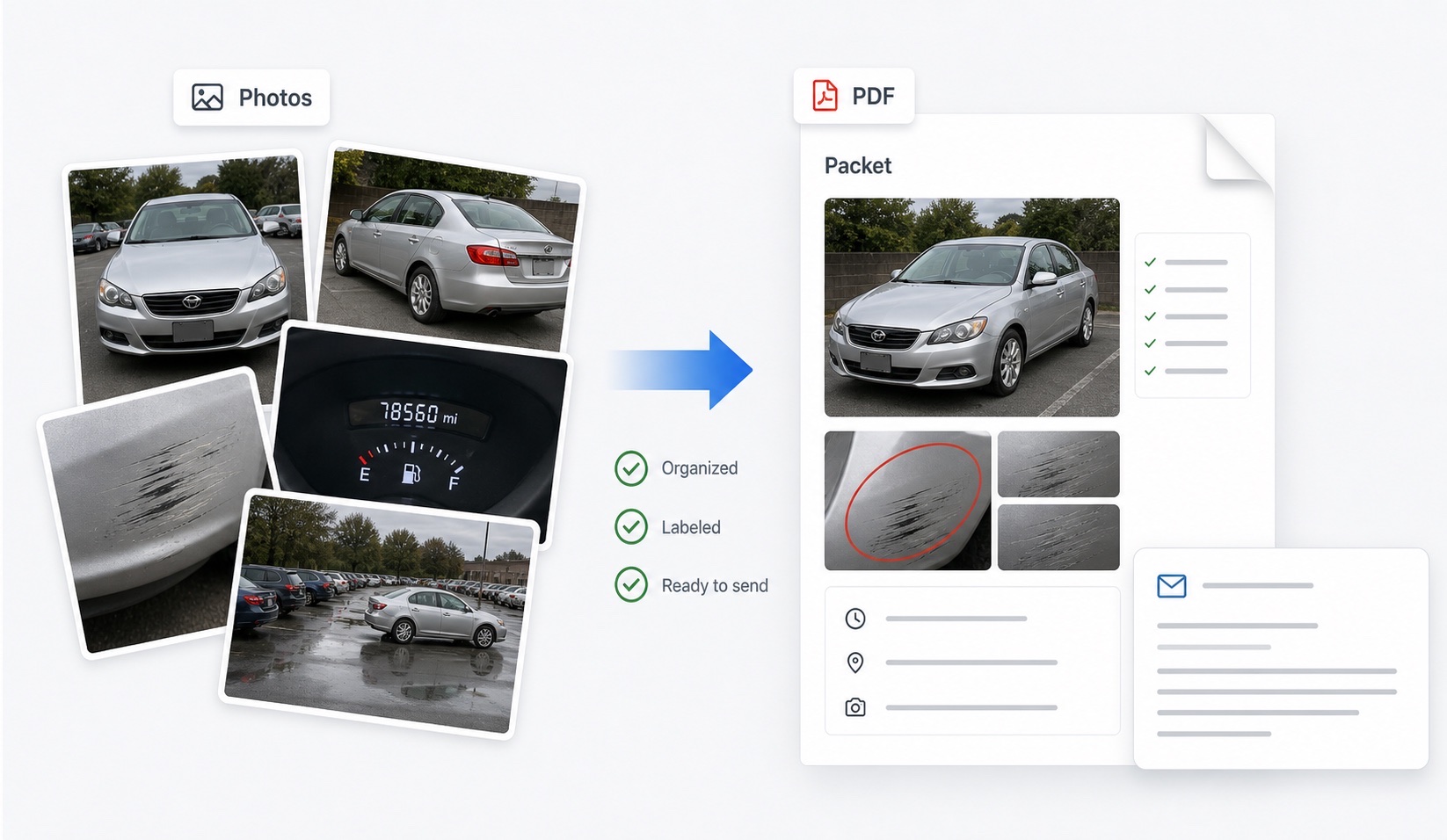
Why photograph before repair rather than after?
Because repair is evidence destruction, however legitimate. The moment panels are pulled, filler is sanded, or the car is even washed, the vehicle stops being a record of the incident and becomes a record of the repair. Every later argument — with an insurer about scope, with a rental company about responsibility, with another driver's carrier about fault — reaches back to what the vehicle looked like before anyone touched it. If that state exists only in memory, you negotiate from weakness.
The discipline is simple: the car gets photographed at every transition. At the scene when safe. At the tow yard or wherever it rests. Before the shop begins. Each stage takes minutes, and any one of the three has settled disputes the others could not — scene photos establish positions, resting photos catch leaks that developed overnight, pre-repair photos document what the estimate was written against.
What belongs in the before-repair photo set?
Shoot the full sequence even where the car looks untouched — undamaged panels are evidence too:
| Group | What to capture |
|---|---|
| Full vehicle | All four sides and corners, entire car in frame |
| Impact areas | Wide, medium, and close for each damaged zone |
| Paint transfer and debris | Foreign paint, rubber marks, glass, and parts on or near the car |
| Wheels and tires | Each wheel face and tread; suspension sits if visibly off |
| Glass and lights | Cracks, chips, broken housings |
| Interior | Deployed airbags, bent seats, dash warning lights on |
| Under the car | Fluid drips, hanging components, exhaust position |
| Identifiers | VIN plate, odometer, plate number |
Add scene context where relevant — skid marks, signage, the other vehicle, road conditions — before it disappears with traffic and weather.
How do I preserve evidence through towing and storage?
The tow is where documentation chains usually break. Steps that keep it intact:
- Photograph the car before it is loaded, if you can do so safely and the operator allows it.
- Keep the tow receipt and note the destination — it documents where the vehicle went and when.
- At the yard, photograph the car again as it sits, including any new contact marks from loading; note them to the yard in writing if they appear.
- Ask the yard not to move, stack, or release the vehicle without notice, and get the daily storage rate in writing — storage fees become their own dispute.
- If the car will sit outdoors for long, photograph periodically; weather exposure that worsens damage is worth having on record.
- Before authorizing release to a shop or a total-loss buyer, take a final set.
Each photo session takes five minutes; each closes a gap someone could later argue through.
What should I document about old damage?
Inventory it deliberately, because pre-existing damage cuts both ways. Undisclosed, it becomes ammunition: an insurer or opposing party who finds an old dent you never mentioned will wonder what else the file omits, and may try to carve it out of the estimate in ways that clip the legitimate claim too. Disclosed, it does the opposite — it fences off exactly what the incident is responsible for and marks you as a careful documentarian.
So photograph old scratches, dents, curb rash, and interior wear with the same wide-medium-close method as the new damage, and label them explicitly as pre-existing in your notes or packet. If you have photos of the car from before the incident — listing photos, trip photos, anything dated — include them. A before-and-after comparison, even an approximate one, is the cleanest way to draw the line, and it is exactly the structure a comparison packet from a tool like DamagePacket is built around.
How do I keep the timeline together for the claim?
Photos prove condition; the surrounding paper proves sequence. Keep one folder holding: the photo sets from each stage, labeled by date and location; the police or incident report number; tow and storage receipts; the insurer's claim number and adjuster contact; the repair estimate and any supplements; and a dated log of calls and messages. When the shop finds hidden damage mid-repair — common after anything more than cosmetic impact — the supplement negotiation leans on your pre-repair photos, so their labels and dates need to be unambiguous.
Before repair finally begins, one last checkpoint: confirm the estimate matches the documented damage, ask the shop to photograph anything they discover on disassembly, and request that significant replaced parts be photographed or held while any dispute is open. From that point the repair can proceed — your evidence no longer lives on the car.
FAQ
When should I photograph car accident damage?
As soon as it is safe and legal: at the scene if possible, again wherever the vehicle comes to rest (tow yard, driveway, shop lot), and once more before any repair, cleaning, or disassembly begins. Each stage can reveal or destroy details.
Should I photograph old damage too?
Yes. Documenting pre-existing marks yourself separates them from the accident damage cleanly, protects you from having the new claim discounted, and prevents the other side from discovering old damage and using it to question your whole file.
What if the car is towed before I can photograph it?
Photograph it at the tow yard or storage lot as soon as you can access it, and keep the tow receipt — it documents the chain of custody. Ask the yard before anything is moved, stacked, or released, and note storage conditions if exposure could worsen damage.
Can I clean the car before the insurer sees it?
Avoid it. Dirt patterns, paint transfer, and debris are evidence — paint transfer in particular can corroborate how two vehicles made contact. Reasonable steps to prevent further damage are fine, but washing, buffing, or clearing broken parts should wait for inspection or photos.
Should I keep replaced parts after repair?
When a dispute is live, ask the shop in writing to photograph and retain significant replaced parts, or at least photograph them before disposal. Damaged components are physical evidence, and estimates get contested after the parts are gone.