
Valet Parking Damage Photos: Build a Dispute Packet
What to do in the first minutes after valet damage, what evidence supports a claim against a valet operator or hotel, how liability generally works, and how to write the claim itself.
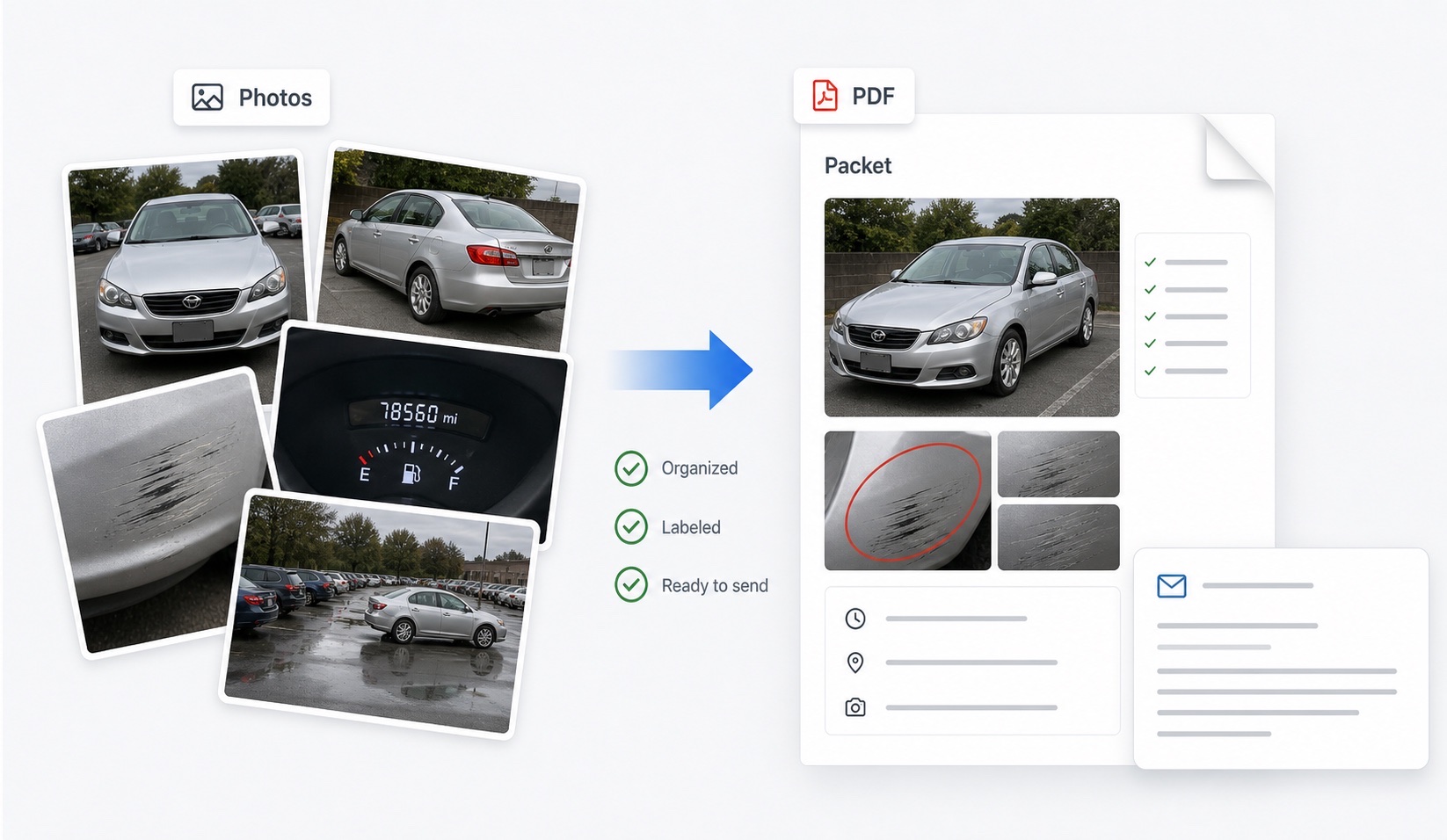
What should I do the moment I notice valet damage?
Stay on the property and document before you drive. Once the car leaves the lot, the operator can argue the damage happened elsewhere, and your claim becomes your word against theirs. In the first minutes: photograph the damage close-up and wide, photograph the whole car, keep the valet ticket and receipt, and ask for the manager or stand captain. Request that an incident report be completed on the spot, and photograph it before handing it back. Get the names of the attendants who parked and retrieved the car, and ask — in writing if possible — that any garage or lot camera footage covering your vehicle be preserved.
None of this requires a confrontation. A calm “I need to document this before I leave” gets you everything the claim will later depend on.
What evidence does a valet damage claim need?
Valet claims turn on the handoff window: the car was in the operator's exclusive control between drop-off and return, so the question is what condition it entered and left that window in.
| Evidence | What it establishes |
|---|---|
| Drop-off photos | Condition when the valet took custody |
| Return photos | Condition when custody ended |
| Valet ticket and receipt | Proof of the bailment and its timing |
| Incident report | Contemporaneous record made at the scene |
| Attendant and manager names | Accountability and follow-up contacts |
| Stand signage and disclaimers | Records the terms actually posted |
| Camera footage request | Independent record of handling and parking |
The drop-off photos are the item almost everyone lacks. If you valet regularly, a 30-second walkaround video at every drop-off is cheap insurance — and exactly the before-material a tool like DamagePacket turns into a comparison packet later.
Who is actually liable: the valet, the hotel, or nobody?
Handing your keys to a valet generally creates a bailment in many states: the operator takes custody of your property and owes a duty of reasonable care while it holds the car. That legal footing is stronger than ordinary self-parking, where you keep the keys and most lots successfully disclaim responsibility. Ticket-back disclaimers (“we are not responsible for damage”) exist at nearly every stand, but courts in many states have declined to enforce them against negligence — though outcomes vary by state and situation, so nothing here is a guarantee.
The practical question is who operates the service. Hotels and restaurants frequently contract valet to third-party parking companies carrying their own liability insurance, so your claim may be routed to the operator's claims department or insurer rather than the venue. Ask at the stand, and if the venue and operator point at each other, submit the written claim to both.
How do I write and submit the claim?
Follow the on-site report with a written claim within a day or two:
- Address it to the valet operator's claims contact, copying the venue's management if a hotel or restaurant was involved.
- State the facts in timeline order: date, drop-off time, ticket number, return time, when and where you noticed the damage, and who you reported it to.
- List the attachments: drop-off photos if any, return photos, the ticket, the incident report, and a repair estimate once you have one.
- Identify pre-existing damage yourself so the new damage is cleanly separated.
- Make one specific request: acknowledgment of the claim, an insurance claim number, or reimbursement of the estimate.
- Set a reasonable response window and note that you have asked for camera footage to be preserved.
Keep the tone factual throughout — the packet argues, the email just delivers it.
What if the operator denies or ignores the claim?
First, escalate inside the chain: valet operators are often national companies, and a claim ignored at the stand level gets attention at the corporate claims department, especially with a complete packet attached. If the venue is a hotel, its guest relations team has leverage over its contractor and a reputational interest in resolution. Second, involve insurers: the operator's garage liability policy is the intended payer for valid claims, and your own auto insurer (collision or comprehensive, depending on the damage) can pay and pursue the operator itself if it sees fault. Third, small claims court fits most valet disputes in size, and a bailment claim supported by an incident report and photo packet presents well there.
Throughout, resist inflating the claim. Ask for the documented repair cost, not for compensation the evidence cannot support — overreach is the fastest way to turn a payable claim into a contested one.
FAQ
What evidence helps most with a valet damage claim?
Photos of the car at drop-off and at return, the valet ticket, timestamps, the location and stand signage, an incident report completed before you leave, names of attendants, and any camera footage the operator or venue can preserve. Before-and-after photos of the damaged panel are the core of the file.
Is the valet company or the hotel responsible?
It depends on who operates the valet. Many hotel and restaurant valets are run by third-party parking companies with their own insurance, so your claim may go to the operator rather than the venue. Ask at the stand who operates the service and get the claims contact in writing.
Do valet ticket disclaimers eliminate liability?
Generally no, not entirely. Handing your keys to a valet typically creates a bailment in many U.S. states, meaning the operator accepts a duty of care, and fine-print disclaimers on tickets are often not enforceable against negligence. The specifics vary by state, so treat the disclaimer as a negotiating point, not a final answer.
Should I include my car's old damage in the packet?
Yes. Identifying pre-existing marks yourself separates them cleanly from the new damage and makes the packet more credible. A claim that hides old scratches invites the operator to find them and question everything else.
What if I did not notice the damage until I got home?
Report it immediately in writing with photos and the ticket or receipt. Same-day reporting with a plausible timeline can still succeed, but every hour weakens the connection, which is why a quick walkaround before driving off the property is worth the thirty seconds.