
Rental Car Company Charged Me for Damage After Return: What to Send
Why damage charges arrive days or weeks after drop-off, what documentation to demand before paying, how the gap between return and inspection works in your favor, and the step-by-step response.
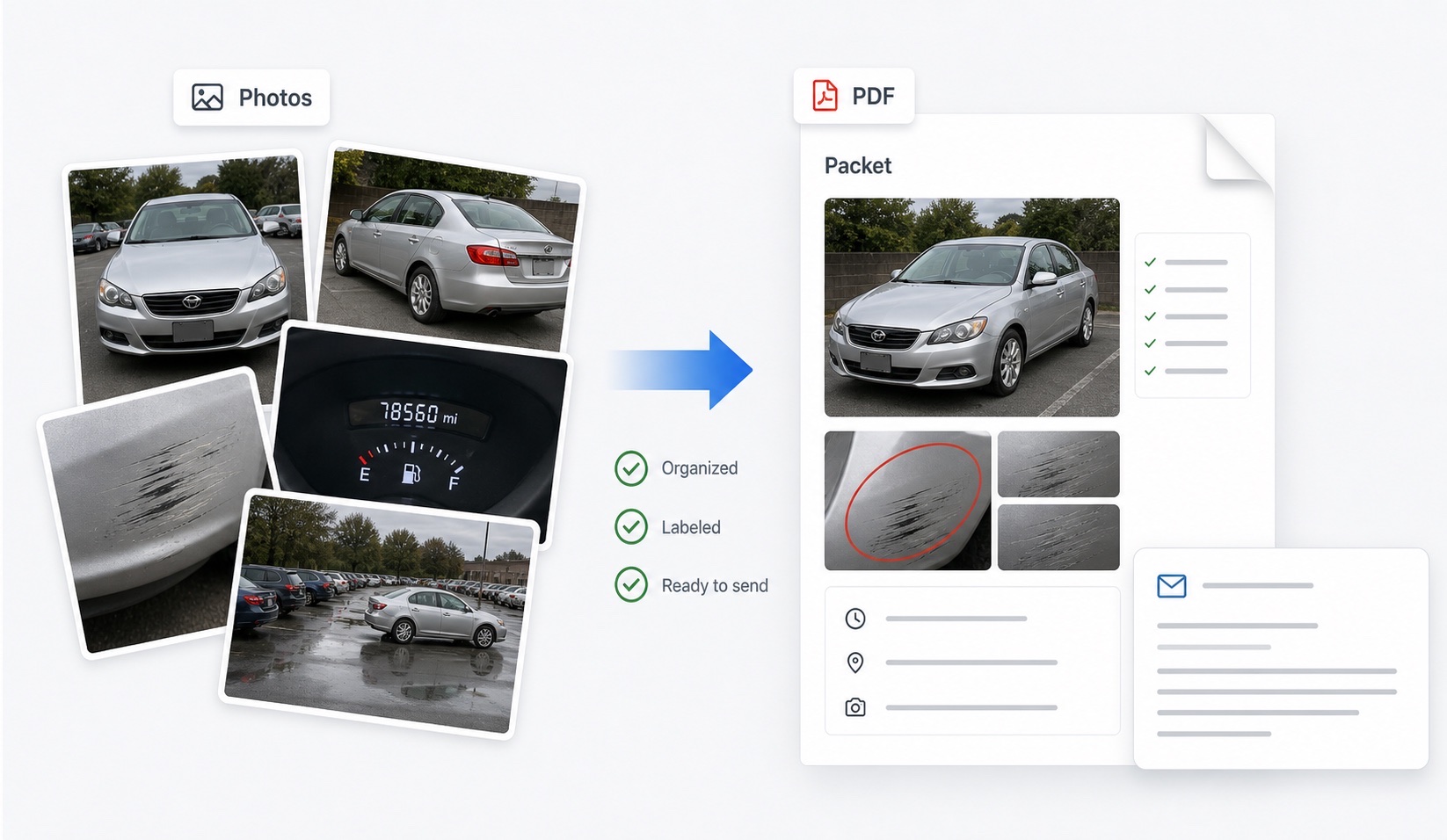
Why do damage charges arrive after the car was returned?
Because most returns are not inspected the moment you leave. Cars are dropped in busy lanes, shuttled to cleaning, and sometimes re-rented within hours; documented inspections may happen at cleaning, at the next checkout, or when a scanner or employee flags something days later. The rental agreement almost always authorizes charging your card after the fact for damage the company attributes to your rental — which is why the charge can appear without warning.
But the same delay that produces the charge produces your leverage. Every hour between your documented return and the company's documented discovery is time the vehicle was in their custody or another renter's hands. The dispute therefore turns on two timestamps: when you provably gave the car back, and when the damage was provably first recorded. Your job is to nail the first and demand the second.
What are the first steps when the notice arrives?
- Preserve everything: the notice email or letter, the invoice, any photos included, and the exact date it arrived.
- Do not pay or accept a quick-settlement discount until you have seen the evidence — payment typically closes the matter.
- Reconstruct your return: find your return photos, the return receipt or closed-contract email, and anything fixing the time — fuel receipt near the lot, parking stamp, boarding pass.
- Check what was claimed against what you have: locate the claimed panel in your pickup and return photos.
- Check your coverage clocks: if a credit card rental benefit or insurer might apply, note their notice deadlines and open claims early.
- Respond in writing within days, disputing the charge and requesting documentation — the list in the next section.
Speed matters less for persuasion than for preserving options; benefit deadlines and evidence both decay.
What documentation should I demand from the company?
A post-return charge rests entirely on the company's records, so ask for them, specifically and in writing:
| Request | What it tests |
|---|---|
| Dated, timestamped photos of the damage | When the damage was actually first recorded |
| Return inspection report | Whether anyone documented condition at your drop-off |
| Itemized repair invoice or estimate | Whether the amount reflects real, specific repair work |
| Rental history since your return | Whether other renters had the car before discovery |
| Fee calculations | How loss-of-use, admin, or diminished-value fees were derived |
| Incident report | Who found the damage, when, and how it was attributed to you |
Consumer advocates treat this as the crux: a company that cannot show the damage existed at your return, and was repaired for the amount claimed, has not substantiated the charge. Add-on fees deserve their own scrutiny — see the loss-of-use fee guide.
How do I present my side of the timeline?
Build the packet around the two-timestamp logic. Open with your return: receipt time, drop-off location, and return photos arranged by panel — the same order as your pickup photos so comparison is mechanical. Then state, neutrally, what is known about discovery: “the notice dated 28 June describes damage first documented on 24 June, nine days after my documented return on 15 June; the vehicle's rental status during that period has not been disclosed.” Let the gap do the arguing.
Where your evidence is thin — no return photos, a panel you never shot — say so and lean on receipts and the company's own records instead (the partial-evidence guide covers this). Assemble it as one labeled document rather than an attachment pile; that assembly step is exactly what DamagePacket automates, though the structure matters more than the tool. Attach it to a short email using the dispute email format.
What if the company holds firm or ignores me?
Escalate deliberately rather than emotionally. Within the company: ask that the file be reviewed above the initial claims handler, restating the unproduced documentation — unanswered evidence requests read badly at every level above the first. Through coverage: if you declined the waiver and paid with a card carrying rental damage protection, file with the benefit administrator promptly; if your auto insurer could be exposed, notify it within policy timelines. Through pressure: state attorney general and consumer protection complaints are free, documented, and taken seriously in volume; travel-consumer advocacy organizations publish escalation contacts for major rental brands.
Treat a Fair Credit Billing Act dispute with your card issuer as a genuine but bounded tool: the 60-day window from the statement date applies, and even a won chargeback does not extinguish the company's underlying claim — it can still bill, pursue collections, or flag your profile. The durable resolution is the one where the claim itself is withdrawn, and that comes from the evidence file.
FAQ
What should I do if a rental company charges me for damage after I returned the car?
Do not pay immediately. Save the notice, gather your pickup and return photos and receipts, ask the company for dated damage photos, the inspection report, an itemized repair invoice, and the vehicle's rental history since your return, then send one organized dispute with your evidence attached.
Can a rental company charge my card after the rental is closed?
Most rental agreements authorize post-return charges for damage, fuel, and fees, so the charge itself is usually contractually permitted. Permitted is not the same as substantiated — you can still dispute the claim and demand the evidence behind it.
Does it matter that the damage was found days later?
Yes, practically. The longer the gap between your return and the documented inspection — especially if the car was rented to others in between — the weaker the link between you and the damage. Ask directly when the damage was first recorded and whether the vehicle went out again before that.
Can I dispute a post-return charge without return photos?
Yes, though the file is weaker. Use the return receipt timestamp, any attendant inspection, fuel and parking receipts, and the company's own records. Be explicit about what you lack; the no-before-photos guide covers building a claim from partial evidence.
Should I just do a credit card chargeback?
Not as a first move. A chargeback may reverse the payment, but the rental company can still pursue the debt through collections and bar you from renting again. Dispute with the company first; involve your card's rental damage benefit if you have one, and treat billing-error disputes as a later option.