
Loss of Use Fee Dispute: Challenging Rental Car Add-On Charges
What loss-of-use, administrative, and diminished-value fees are, how rental companies calculate them, why the fleet utilization log is the key document, and how to dispute each line in writing.
What are these add-on fees on my damage invoice?
Rental damage invoices routinely carry three lines beyond the repair itself. Loss of use: the revenue the car allegedly missed while in the shop, usually the daily rate times a claimed number of repair days. Administrative fee: a flat charge for processing the claim, often tiered to repair size. Diminished value: the vehicle's supposedly reduced resale worth after repair. Together they can rival or exceed the repair cost — a modest bumper respray can arrive as an invoice several times the body shop's number once the add-ons stack.
Each line rests on a different assumption, so each is disputed differently. The repair line asks “was this work done, at this price?” Loss of use asks “would this car really have been earning?” The administrative fee asks “what schedule produced this figure?” Diminished value asks “who assessed this, and how?” Your dispute should ask all four, in writing, per line.
How is loss of use actually calculated?
Internally, and by formula. A common industry method converts the repair estimate's labor hours into repair days — one reported approach divides labor hours by a fixed daily-hours figure — then multiplies by the daily rental rate; total losses sometimes get a fixed day count. The details vary by company and are rarely volunteered, which is precisely why your first written question is: how many days were claimed, derived how, at what daily rate?
The formula's soft spots are visible once stated. Repair days derived from labor hours ignore how shops actually schedule — a six-labor-hour job can wait a week or be done in a morning. The daily rate is often the location's retail rate, not the discounted rate the car realistically earned. And the whole computation assumes the car was needed at all during those days — the assumption the utilization log exists to test. None of this makes the fee automatically wrong; it makes an unsubstantiated version of it worth contesting.
Why is the fleet utilization log the key document?
Because loss of use is a lost-profit claim, and lost profit requires that profit was actually lost. If the location had comparable cars sitting idle during the repair window, a customer who wanted a car got one; the damaged unit's absence cost nothing. The fleet utilization log — the record of how fully the fleet was deployed — is the document that answers this, and its status is telling: many credit card benefit programs will not reimburse loss-of-use fees unless the rental company produces it. The card industry, which pays these claims at scale, treats the fee as unproven without it. You are entitled to apply the same standard.
Request it explicitly: “please provide the fleet utilization log for [location] for [repair period], supporting the claimed loss of use.” Companies produce it, reduce the fee, or go quiet — and all three responses inform your next step. Several states additionally regulate loss-of-use recovery from renters, so the fee's enforceability can itself vary by jurisdiction.
How do I dispute each fee line in writing?
One letter, per-line requests:
| Line | Request | Weak answer looks like |
|---|---|---|
| Repair | Itemized final invoice; confirmation work was performed | A flat estimate, never reconciled to an invoice |
| Loss of use | Day count and derivation, daily rate basis, fleet utilization log | “Per our standard formula” with no log |
| Administrative fee | The fee schedule and what processing it reflects | A round number with no schedule |
| Diminished value | The appraisal method and who performed it | A percentage applied to repair cost, unexplained |
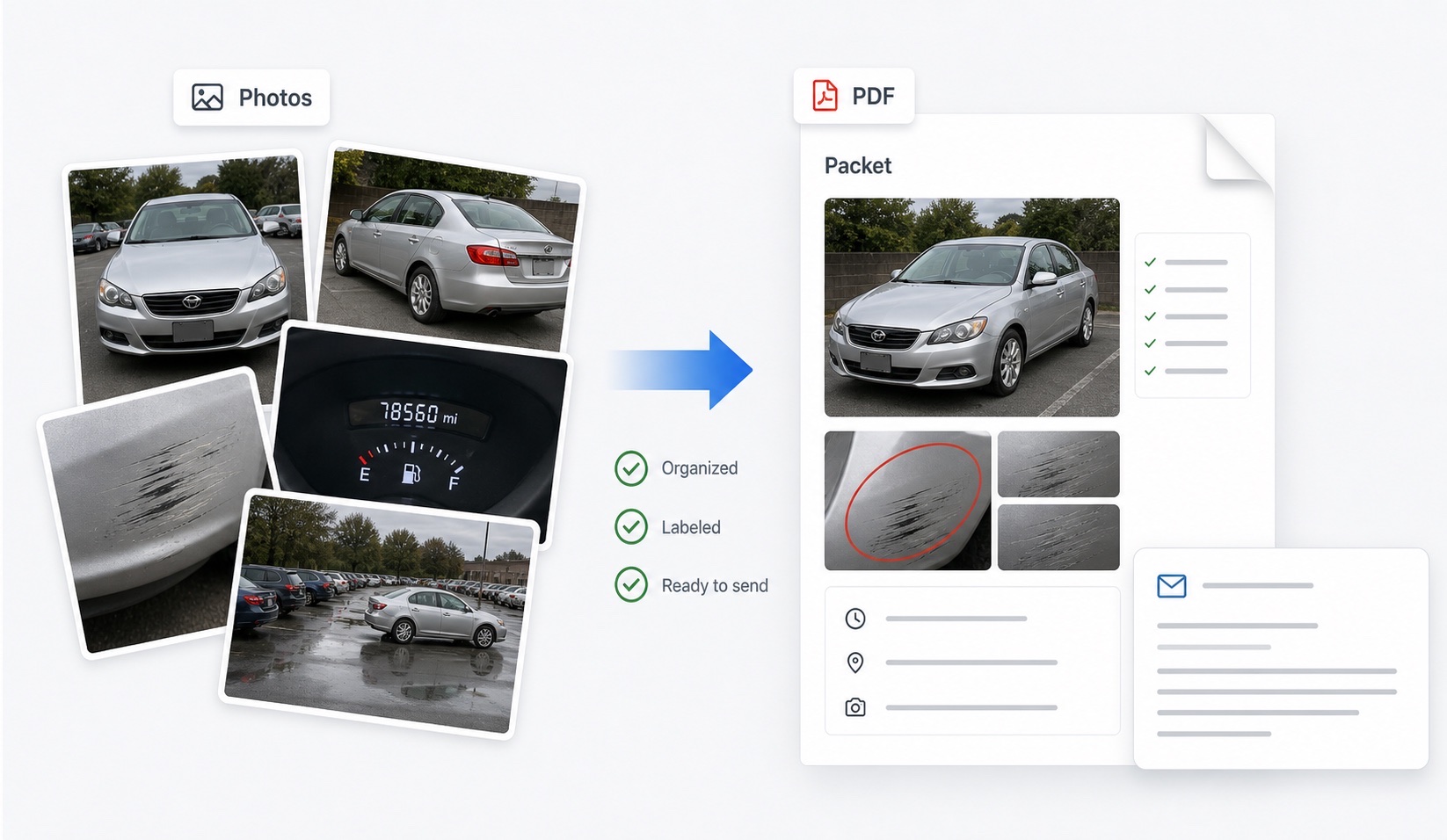
Frame your position concretely — for example, prepared to resolve at the documented repair amount, with add-ons contested pending substantiation. Attach your photo packet and rental documents so the underlying damage question stays anchored (the evidence guide covers that layer), and set a response window. The letter template adapts directly.
What outcomes should I expect?
Fee disputes resolve more often than damage disputes, because the add-ons are the invoice's least-documented layer. Common endings: the company produces the repair invoice but not the utilization log and drops or halves loss of use; administrative fees quietly disappear from a revised invoice; diminished value vanishes on first challenge for cosmetic repairs. Where a card benefit is in play, the administrator's own refusal to reimburse undocumented fees does your negotiating for you — forward every line to it and let program requirements set the standard (filing guide).
Hold the frame throughout: you are not refusing legitimate costs; you are requiring that each line be substantiated the way any commercial invoice would be. Keep the correspondence, log the calls, and if the company charges first and answers never, the unanswered per-line requests become the spine of an attorney-general complaint or small-claims filing. Documented specificity is what separates a fee dispute that resolves from one that just simmers.
FAQ
What is a loss-of-use fee on a rental car damage claim?
It is the rental company's charge for revenue the damaged car allegedly could not earn while out of service for repair — typically the daily rental rate multiplied by claimed repair days. It appears as a separate line on damage invoices, on top of the repair cost itself.
How do rental companies calculate loss-of-use days?
Methods vary; a common industry approach derives repair days from the estimate's labor hours, and some companies use fixed day counts for total losses. The calculation is an internal formula, not an audited fact — which is why asking for the basis in writing is a legitimate and often productive request.
What is a fleet utilization log and why does it matter?
It is the record showing how fully a location's fleet was rented during the repair period. Loss-of-use assumes the damaged car would have earned revenue; if the lot had idle equivalent cars, that assumption fails. Many credit card benefit programs reimburse loss-of-use only when the rental company produces this log.
Can rental companies legally charge loss-of-use fees?
Generally yes, where the rental agreement provides for it — but several U.S. states regulate what can be recovered from renters, and card benefit programs impose their own documentation conditions. The fee being permitted does not make any particular calculation of it substantiated.
Should I pay the repair but dispute the fees?
That is often a reasonable position, and stating it makes your dispute concrete: accept the documented repair invoice, contest the undocumented add-ons. Put it in writing and request per-line substantiation — companies frequently settle at the documented-repair figure.